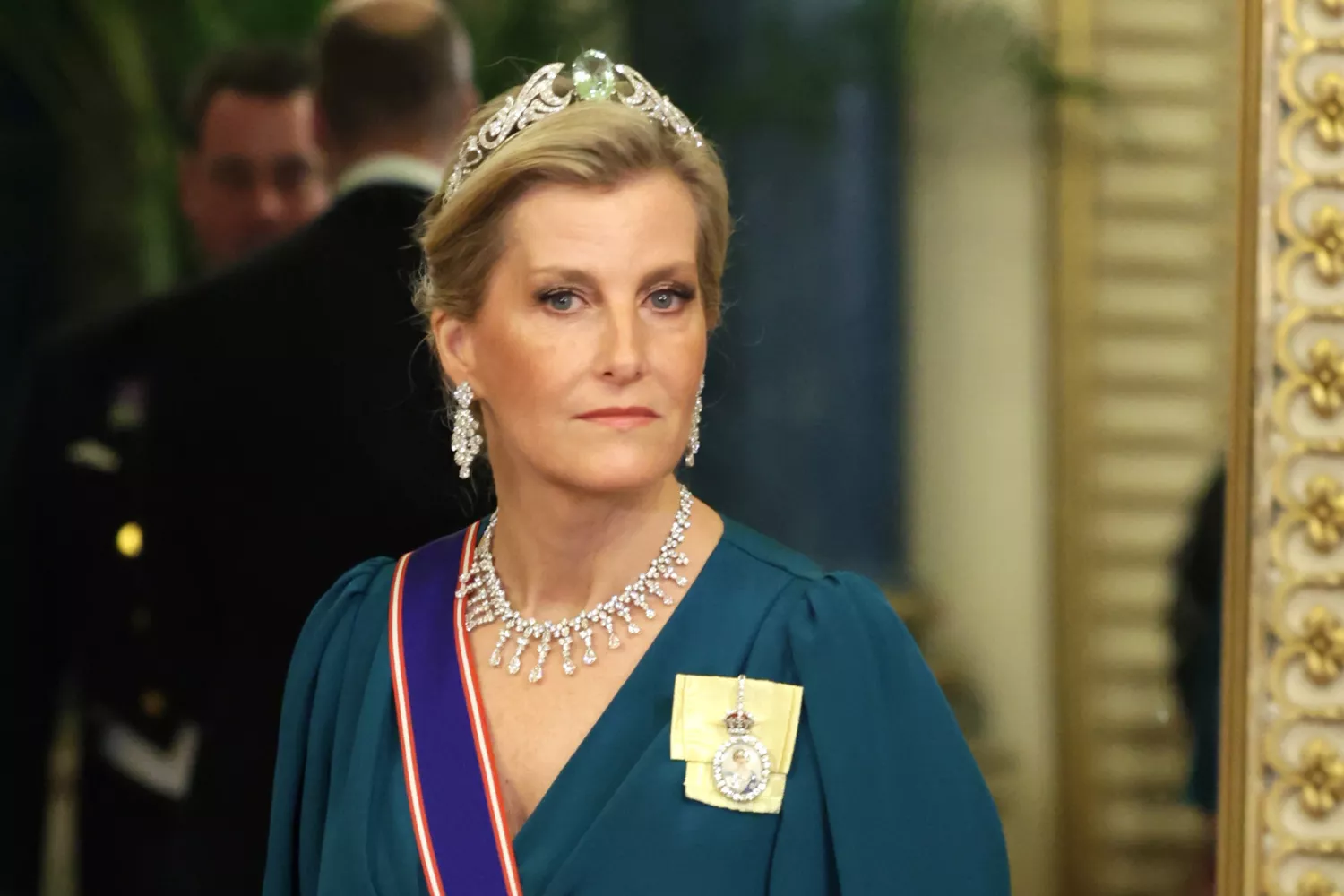
Sophie, Duchess of Edinburgh: A Royal Life of Dedication & Family

pivot62.com – Sophie, Duchess of Edinburgh, born Sophie Helen Rhys-Jones on January 20, 1965, is the wife of Prince Edward, Duke of Edinburgh, and a member of the British royal family. Throughout her life, Sophie has been recognized for her grace, dedication to charity, and commitment to family. Having seamlessly integrated into royal life, she is known for her advocacy in a wide range of charitable causes, her role as a mother, and her strong partnership with Prince Edward. As the Duchess of Edinburgh, a title she received following the passing of Prince Philip in 2021, Sophie has continued to evolve in her royal duties, balancing them with a fulfilling family life and an increasing presence in the public eye.

Early Life and Career

Sophie was born in Oxford, England, and grew up in the rural village of Brenchley, Kent. Her early years were relatively private, with her family maintaining a low-key existence away from the limelight. Sophie attended West Kent College in Tonbridge, where she studied secretarial skills and business studies. After completing her education, Sophie worked in public relations and event planning, gaining experience at various firms. Her professional background in PR would prove invaluable in her later royal role, where discretion and communication skills are essential.

Before her marriage to Prince Edward, Sophie’s career as a public relations professional was a notable part of her life. She worked for Clinton Cards and later for McKinsey & Company. In 1996, she co-founded Rhubarb, a public relations agency that she ran until she joined the royal family. Sophie’s PR work gave her insight into media management and public appearances, skills that would serve her well as a member of the royal family.

Meeting Prince Edward and Royal Marriage

Sophie met Prince Edward, the youngest son of Queen Elizabeth II and Prince Philip, in 1993 at a charity event. Their relationship quickly developed, and they became one of the most adored couples in the royal family. Sophie and Prince Edward’s relationship was marked by their shared values of service, discretion, and a strong sense of duty.

In 1999, Sophie and Prince Edward were married in a grand ceremony at St. George’s Chapel in Windsor Castle. The wedding was a significant occasion for the royal family, as it marked the first royal wedding of the 21st century. Sophie became the Countess of Wessex upon her marriage, and the couple’s union was seen as an example of a more modern and relatable royal relationship.

Over the years, Sophie and Edward’s relationship has been characterized by mutual support and a strong partnership. Sophie, often described as warm and down-to-earth, has seamlessly adapted to her role as a member of the royal family, and the couple has frequently been seen at royal events and charity functions together.

The Duchess of Edinburgh: A New Role

Following the death of Prince Philip in April 2021, Sophie’s role within the royal family grew in significance. In March 2023, Sophie’s husband, Prince Edward, was granted the title of Duke of Edinburgh, and she became the Duchess of Edinburgh. This title, once held by Prince Philip, was passed to Edward as part of the monarchy’s plan for the next generation of royals. Sophie’s new title has not only marked a significant shift in her royal responsibilities but also reflected her increasing role in supporting Prince Edward as the Duke of Edinburgh.

As the Duchess of Edinburgh, Sophie has taken on an active role in supporting the Duke of Edinburgh’s Award, a youth development program created by Prince Philip in 1956. This program has been a central part of the Duke’s legacy, and Sophie’s involvement has helped to continue its mission of empowering young people and encouraging them to achieve their full potential. Sophie has also been deeply involved in various other charitable causes, demonstrating her commitment to both the royal family’s duties and her personal values.

Charity Work and Advocacy

One of Sophie’s defining characteristics as a royal is her commitment to charitable work. She is involved in numerous organizations and has a special focus on issues related to children, education, and health. Her charitable endeavors have made her one of the most active members of the royal family in terms of public service, and she often uses her position to raise awareness for causes that matter to her.

Sophie is the patron of several organizations, including the Women’s Refugee Commission, Children’s Society, and Royal Academy of Dance. Her charity work often focuses on improving the lives of vulnerable people, particularly children, and her advocacy for women’s rights and education has garnered widespread praise. She also works with the National Society for the Prevention of Cruelty to Children (NSPCC), where she has supported initiatives aimed at protecting young people from abuse and neglect.

In addition to her work with established charities, Sophie is also known for her involvement in the Duchess of Edinburgh’s Award. This initiative, launched in 2008, aims to encourage young women to step out of their comfort zones and develop the skills and confidence to succeed in life. Sophie’s leadership in this program, alongside her support for the Duke of Edinburgh’s Award, highlights her commitment to helping young people build self-esteem, resilience, and a sense of community.

Family Life and Motherhood

Sophie and Prince Edward have two children: Lady Louise Windsor, born in 2003, and James, Viscount Severn, born in 2007. Both children have largely grown up out of the public eye, with Sophie and Edward being fiercely protective of their privacy. Unlike some other royal children, Louise and James have not been thrust into the media spotlight and have been allowed to live relatively normal lives, despite their royal status.

Sophie has often spoken about her role as a mother, describing it as one of the most important parts of her life. She has been seen attending school events and spending quality time with her children, and she has been vocal about the importance of maintaining a balance between her royal duties and family life. Sophie’s commitment to her children’s well-being is evident, and she has managed to raise them in a manner that reflects her values of kindness, humility, and respect for others.

Sophie’s Legacy and Future in the Royal Family

As the Duchess of Edinburgh, Sophie’s legacy continues to unfold. She has firmly established herself as an active, compassionate, and tireless royal, with her charity work and advocacy taking center stage in her royal life. Her marriage to Prince Edward has brought her into the heart of the royal family, and her evolving role as the Duchess of Edinburgh highlights her importance in the next generation of royals.

Sophie’s personal and professional qualities—her grace, dedication to her family, and commitment to service—ensure that she will continue to have a profound impact on the royal family’s charitable work and public image. As she steps further into her role alongside Prince Edward, the Duchess of Edinburgh will undoubtedly remain a key figure in the monarchy, advocating for important causes and supporting her family as they move forward into the future.

Mars Missions: The Quest for Life and Water

pivot62.com – The quest for life and water on Mars has been a central theme in the exploration of the Red Planet. Mars, our neighboring planet, has long captivated the imagination of scientists and the public alike, with its potential to harbor life or to have once supported life. The search for water, in particular, is crucial because water is essential for life as we know it. Here’s an overview of the Mars missions that have contributed to this quest:

Viking Missions (1975)

The Viking program consisted of two spacecraft, each carrying an orbiter and a lander. The primary mission was to search for biosignatures of life on Mars. The landers performed experiments that sought to detect microbial life, but the results were inconclusive. The orbiters also mapped the surface, revealing features that suggested past water flow.

Mars Pathfinder (1996)

Mars Pathfinder landed the Sojourner rover on Mars in 1997. While not specifically designed to search for life, Pathfinder provided evidence of an ancient flood that reshaped the Martian landscape, further suggesting that water once flowed on the surface.

Mars Exploration Rovers (MER) – Spirit and Opportunity (2003)

The MER mission involved two rovers that landed on opposite sides of Mars. Opportunity discovered strong evidence that the planet was once significantly more wet than it is today, finding sedimentary rocks and minerals that form in the presence of water. Spirit also found evidence of past water activity.

Phoenix Mars Lander (2007)

Phoenix landed in the Martian arctic and directly sampled water ice, confirming the presence of subsurface ice. It also found perchlorate salts, which could affect the habitability of the soil.

Mars Science Laboratory (MSL) – Curiosity Rover (2011)

Curiosity is a car-sized rover designed to assess the habitability of Mars. It has found evidence of ancient lakes and streams, as well as complex organic molecules necessary for life. Curiosity also drilled into a rock and found clay minerals that form in water, suggesting a past environment that could have been habitable.

Mars InSight (2018)

While not directly searching for life, InSight is a stationary lander that studies the Martian surface and interior, providing information that could help determine whether Mars ever had the conditions to support life.

Mars 2020 – Perseverance Rover and Ingenuity Helicopter (2020)

Perseverance is the latest rover to land on Mars, with a primary mission to search for signs of ancient life. It is equipped with advanced instruments to study the Martian climate, geology, and collect samples for future return to Earth. Ingenuity, a small helicopter, demonstrated the ability to fly in the thin Martian atmosphere, opening new possibilities for exploration.

Future Missions

Future missions aim to build on these discoveries, including the return of samples to Earth for detailed analysis and the potential for human exploration. The search for life on Mars continues to be a cornerstone of space exploration, with each mission bringing us closer to understanding whether we are alone in the universe.

Lessons from Childhood: The Playground of Life

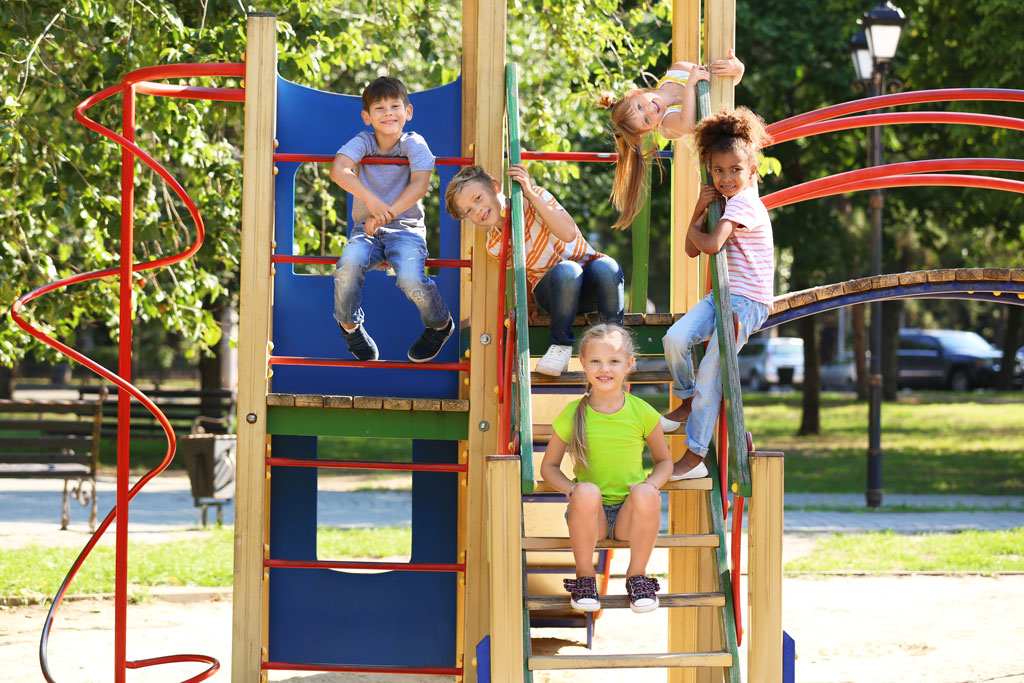
pivot62.com – As adults, we often find ourselves caught in the whirlwind of responsibilities, deadlines, and the relentless pursuit of success. In the midst of this adulting marathon, it’s easy to forget the simple joys and profound lessons that childhood playgrounds once taught us. The playground, a microcosm of life, is not just a place for children to frolic; it’s a stage where the early acts of our life’s drama are played out, offering lessons that, if remembered, can guide us through the complexities of adulthood.

1. The Art of Taking Turns

One of the first lessons learned on the playground is the art of taking turns. Whether it was waiting for a swing or lining up for the slide, children quickly understand that patience and fairness are essential. This lesson is equally applicable in adulthood, where patience and the understanding that not everything happens on our schedule are crucial. Life, much like the playground, is about sharing and waiting for our turn, whether it’s in our careers, relationships, or personal growth.

2. The Importance of Teamwork

Playground games often require teamwork, teaching children the value of collaboration and communication. Whether it was a game of tug-of-war or a team sport, success depended on working together towards a common goal. As adults, we find ourselves in similar situations, where teamwork is the key to overcoming challenges and achieving success. The playground reminds us that together, we can accomplish more than we ever could alone.

3. The Joy of Exploration

The playground is a place of exploration and discovery. Children are naturally curious, and the playground offers endless opportunities to climb, swing, and slide, pushing the boundaries of their comfort zones. This spirit of exploration is something that should be carried into adulthood. Life is an adventure, and embracing new experiences, learning, and growth are essential to living a fulfilling life.

4. The Resilience to Bounce Back

Falls and scrapes are inevitable on the playground, but so is the resilience to get back up. Children learn that failure is not the end but a stepping stone to success. They dust themselves off and try again, undeterred by setbacks. As adults, we can draw on this playground lesson to face life’s challenges with resilience and perseverance, understanding that failure is not final and that we always have the strength to rise again.

5. The Value of Imagination

The playground is a canvas for imagination, where a simple structure can become a castle, a spaceship, or a secret hideout. This ability to imagine and create is a powerful tool that should not be underestimated. In adulthood, imagination fuels innovation, creativity, and the ability to dream big. The playground teaches us that with imagination, the possibilities are endless.

6. The Importance of Play

Finally, the playground reminds us of the importance of play. In a world that often values work over play, it’s easy to forget the joy and benefits that come from simply having fun. Play reduces stress, boosts creativity, and fosters social bonds. As adults, we should remember to make time for play, recognizing its importance in maintaining our mental and emotional well-being.

In conclusion, the playground of life offers valuable lessons that can guide us through adulthood. From the art of taking turns to the importance of play, these childhood lessons are the building blocks of a well-lived life. By remembering and applying these lessons, we can navigate the complexities of adulthood with the wisdom, joy, and resilience that the playground once taught us.

Balancing Art and Existence: The Writer’s Life

pivot62.com – In the quiet corners of the world, where the hum of daily life fades into the background, writers weave the fabric of existence into stories that resonate with the human experience. The writer’s life is a delicate balance between the art of storytelling and the demands of existence. It is a journey filled with solitude, creativity, and the relentless pursuit of the perfect word.

At the heart of the writer’s existence is the art of writing itself. It is an art form that requires patience, discipline, and an unwavering commitment to the craft. Writers spend countless hours honing their skills, experimenting with language, and exploring the depths of human emotion. They are driven by a desire to create something meaningful, to tell stories that inspire, entertain, and provoke thought.

However, the pursuit of art does not exist in a vacuum. Writers must also navigate the practicalities of life. They must find a balance between the demands of their craft and the need to sustain themselves financially, emotionally, and physically. This balance is often precarious, as the life of a writer can be unpredictable and fraught with challenges.

One of the greatest challenges writers face is the struggle for recognition and financial stability. The path to success in the literary world is often long and arduous, with many writers facing rejection and obscurity before finding their audience. This can lead to feelings of isolation and self-doubt, as writers question the value of their work and their place in the world.

To maintain this balance, writers must cultivate resilience and a strong support system. They must learn to manage their time effectively, carving out space for writing amidst the chaos of life. This often requires sacrifice and a willingness to prioritize their art, even when it means forgoing other opportunities or comforts.

The digital age has both complicated and simplified the writer’s life. On one hand, the internet has opened up new avenues for publication and distribution, allowing writers to reach a global audience with the click of a button. On the other hand, the proliferation of content has made it more difficult for writers to stand out and be heard. Social media and online platforms demand constant engagement, blurring the lines between personal and professional life.

Despite these challenges, the life of a writer is also filled with profound rewards. There is a unique joy in creating something from nothing, in giving voice to the voiceless, and in connecting with readers on a deep, emotional level. Writers have the power to change perspectives, challenge societal norms, and inspire change.

In the end, the writer’s life is a testament to the enduring power of storytelling. It is a life dedicated to the pursuit of beauty, truth, and understanding. For those who choose this path, the balance between art and existence is not just a challenge to be overcome, but a journey to be embraced—a journey that enriches both the writer and the world they seek to illuminate with their words.