The Legendary Marlon Brando – Revolutionary Acting Style

pivot62.com – Marlon Brando is often regarded as one of the most influential actors of the 20th century. Renowned for his groundbreaking performances and distinctive acting style, Brando transformed the landscape of American cinema. This article delves into the life and legacy of Marlon Brando, exploring the attributes that contributed to his legendary status.

Revolutionary Acting Style

Marlon Brando is celebrated for his revolutionary approach to acting, which emphasized emotional authenticity and raw intensity. He was a pioneer of the “Method Acting” technique, which involves drawing on personal experiences to bring depth and realism to performances. This approach allowed Brando to deliver profoundly moving and memorable portrayals, setting a new standard for actors of his time.

Iconic Roles

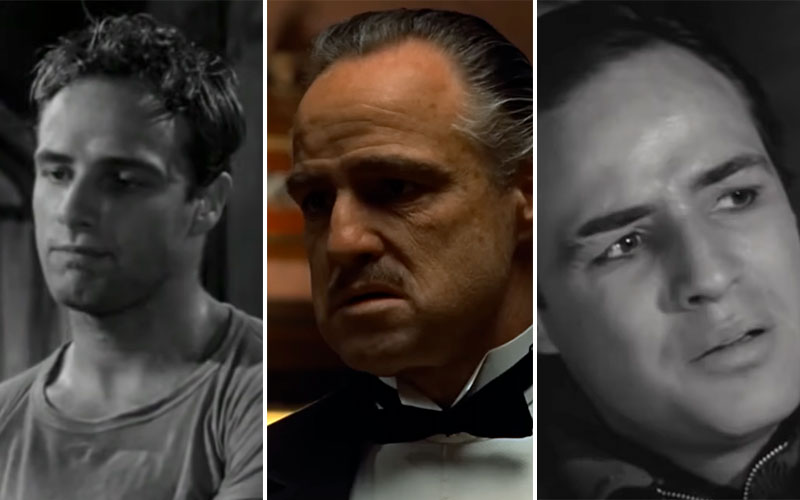
Brando’s career is marked by a series of iconic roles that have left an indelible mark on cinema history. His portrayal of Stanley Kowalski in “A Streetcar Named Desire” showcased his ability to embody complex and conflicted characters. In “On the Waterfront,” his performance as Terry Malloy earned him an Academy Award and solidified his reputation as a formidable talent. Perhaps most famously, Brando transformed into the iconic Vito Corleone in “The Godfather,” a role that remains one of the most celebrated in film history.

Influence on Cinema

Marlon Brando’s influence extends far beyond his individual performances. He reshaped the craft of acting, inspiring a generation of actors to pursue greater authenticity and emotional depth in their work. His impact can be seen in the performances of countless actors who followed in his footsteps, making his contributions to cinema both profound and enduring.

A Complex Persona

Beyond his on-screen achievements, Marlon Brando was known for his complex and enigmatic personality. He was a fiercely private individual who often shunned the trappings of Hollywood fame. Brando was also an outspoken advocate for social justice, using his platform to support civil rights and Native American rights. His commitment to these causes reflected his deep-rooted sense of justice and his desire to effect positive change in the world.

Enduring Legacy

Marlon Brando’s legacy is one of unparalleled talent and transformative impact. His ability to convey the deepest human emotions with authenticity and power continues to resonate with audiences and actors alike. As a cultural icon, Brando’s influence remains a benchmark for excellence in acting, ensuring his place in the annals of cinematic history.

Conclusion

Marlon Brando’s legendary status is a testament to his extraordinary talent, innovative approach, and enduring influence on the art of acting. Through his unforgettable performances and commitment to authenticity, Brando left an indelible mark on the world of cinema. As actors and audiences continue to draw inspiration from his work, Marlon Brando’s legacy as a titan of film remains firmly cemented.

The Mysterious Affair at Styles by Agatha Christie

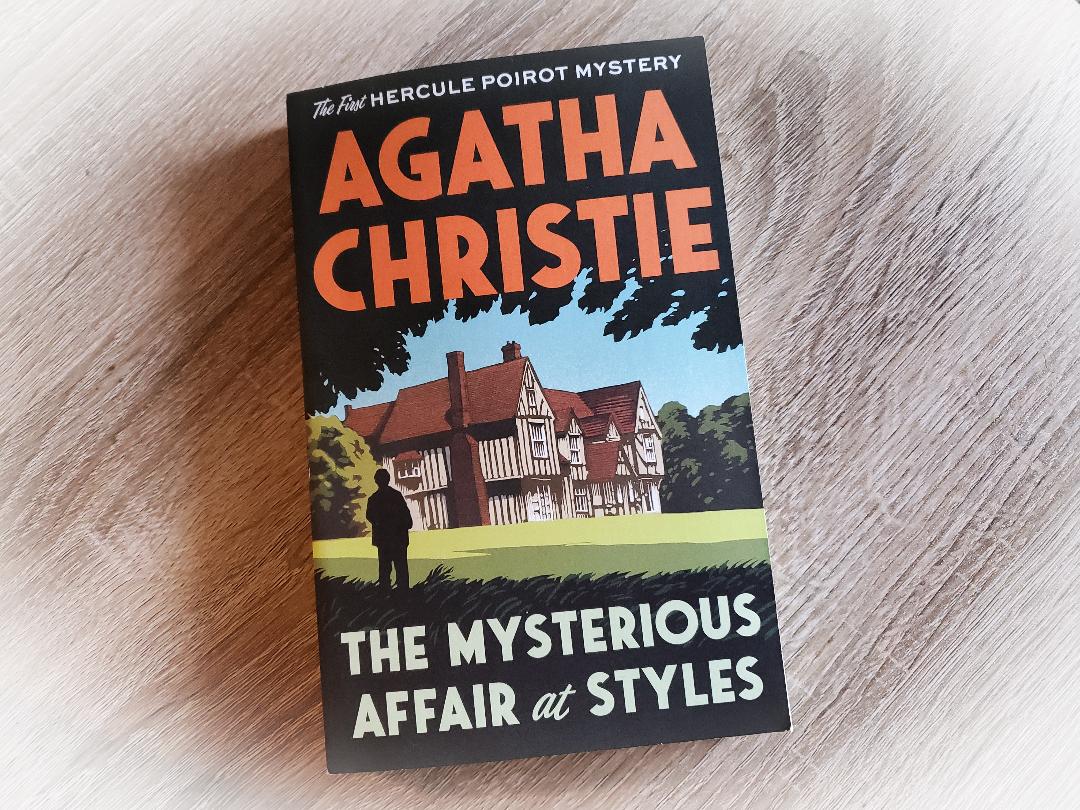
pivot62.com – “The Mysterious Affair at Styles” is Agatha Christie’s debut novel, published in 1920. This groundbreaking work introduced the world to the iconic detective Hercule Poirot and set the stage for Christie’s illustrious career in detective fiction. The novel is a classic example of a “locked room” mystery, where the crime scene is seemingly inaccessible to anyone other than the victim.

Plot Overview

The story begins when Captain Arthur Hastings, a soldier on sick leave from the First World War, is invited to stay at Styles Court, the country estate of his old friend John Cavendish. The tranquil setting is soon marred by the suspicious death of Emily Inglethorp, John’s elderly and wealthy stepmother. Hastings, realizing the gravity of the situation, seeks the help of his old acquaintance, the renowned Belgian detective Hercule Poirot, who has been living in England as a refugee.

Poirot, with his keen observational skills and methodical approach, begins to unravel the complex web of motives and alibis surrounding the case. The suspects include John Cavendish, his younger brother Lawrence, Emily’s new husband Alfred Inglethorp, her companion Evelyn Howard, and others. Through a series of clever deductions and a deep understanding of human psychology, Poirot ultimately identifies the murderer and brings them to justice.

Characters

  • Hercule Poirot: The eccentric and egotistical Belgian detective known for his meticulous attention to detail and his famous “little grey cells.”
  • Arthur Hastings: The narrator of the story and a friend of Poirot, who provides a more human perspective on the events.
  • Emily Inglethorp: The wealthy and elderly victim, whose death sets the mystery in motion.
  • Alfred Inglethorp: Emily’s second husband, a suspect in the murder.
  • John Cavendish: Emily’s stepson and the owner of Styles Court.
  • Evelyn Howard: Emily’s companion, who exhibits animosity towards Alfred.

Themes and Analysis

“The Mysterious Affair at Styles” explores themes of betrayal, greed, and the complexity of human relationships. Christie’s use of poison as the murder weapon, a choice influenced by her work in a hospital dispensary during World War I, adds a layer of medical intrigue to the plot. The novel also delves into the psychological aspects of the characters, revealing their innermost thoughts and motivations.

Historical Context

Christie began writing the novel in 1916, inspired by a dare from her sister Madge to write a detective story. Despite initial rejections from publishers, the manuscript was eventually accepted by John Lane and The Bodley Head. The novel’s publication marked the beginning of Christie’s prolific career, which would span over five decades and include numerous best-selling novels.

Legacy

“The Mysterious Affair at Styles” is not only a milestone in Christie’s career but also a significant contribution to the Golden Age of detective fiction. The novel has been adapted for television and radio multiple times, further cementing its place in popular culture. Christie’s creation of Hercule Poirot in this novel laid the foundation for a series of 33 Poirot novels, making him one of the most recognizable characters in the genre.

Conclusion

“The Mysterious Affair at Styles” remains a classic example of Christie’s masterful storytelling and her ability to craft intricate plots that keep readers guessing until the very end. It is a testament to her skill as a writer and her enduring influence on the world of detective fiction.

The Straight Hair Updo: Elegant Styles for Special Occasions

pivot62.com – When it comes to special occasions, the way you style your hair can significantly impact your overall look. Straight hair updos are a timeless choice that exudes elegance and sophistication. Whether you’re attending a wedding, a formal gala, or any other special event, these hairstyles can help you make a statement. Here are some elegant straight hair updo styles to consider for your next big event.

1. The Classic Chignon

The chignon is a classic updo that never goes out of style. To achieve this look, start by straightening your hair to ensure it’s sleek and smooth. Then, gather your hair at the nape of your neck and twist it into a low bun. Secure the bun with bobby pins, and for an extra touch of elegance, wrap a small section of hair around the base to hide the pins. Finish with a light-hold hairspray to keep the style in place.

2. The Sleek Ponytail Updo

A sleek ponytail updo is both chic and effortless. Begin by straightening your hair and then pull it back into a high or low ponytail, depending on your preference. Secure the ponytail with a clear elastic band. Next, wrap a small section of hair around the base of the ponytail to conceal the band and secure it with a bobby pin. You can then twist the ponytail and pin it up to create a more intricate updo.

3. The Braided Updo

Braids add a beautiful texture to any updo. Start by creating a side braid or a French braid on one side of your head. Once you reach the back of your head, continue braiding your hair straight back and secure the end with an elastic band. Then, wrap the braid around the base of your neck and pin it in place. This style is perfect for those who want a romantic yet sophisticated look.

4. The Half-Up, Half-Down Updo

The half-up, half-down style is versatile and can be dressed up or down depending on the occasion. Straighten your hair and then gather the top section, securing it with a clip or elastic at the back of your head. You can leave the rest of your hair loose or curl the ends for a softer look. This style is ideal for those who want to keep their hair down while still having an updo element.

5. The Top Knot

The top knot is a modern and edgy updo that’s perfect for those who want to make a bold statement. Straighten your hair and then gather it at the top of your head, securing it with an elastic band. Wrap your hair around the base of the ponytail to create a knot and secure it with bobby pins. This style works well for both casual and formal events.

Conclusion

Straight hair updos are a versatile and elegant choice for special occasions. Whether you prefer a classic chignon, a sleek ponytail, a braided updo, a half-up, half-down style, or a top knot, there’s a straight hair updo that can complement your look and personality. With these styles, you’re sure to turn heads and feel confident at any event.

Advanced Techniques in Continuation-Passing Style

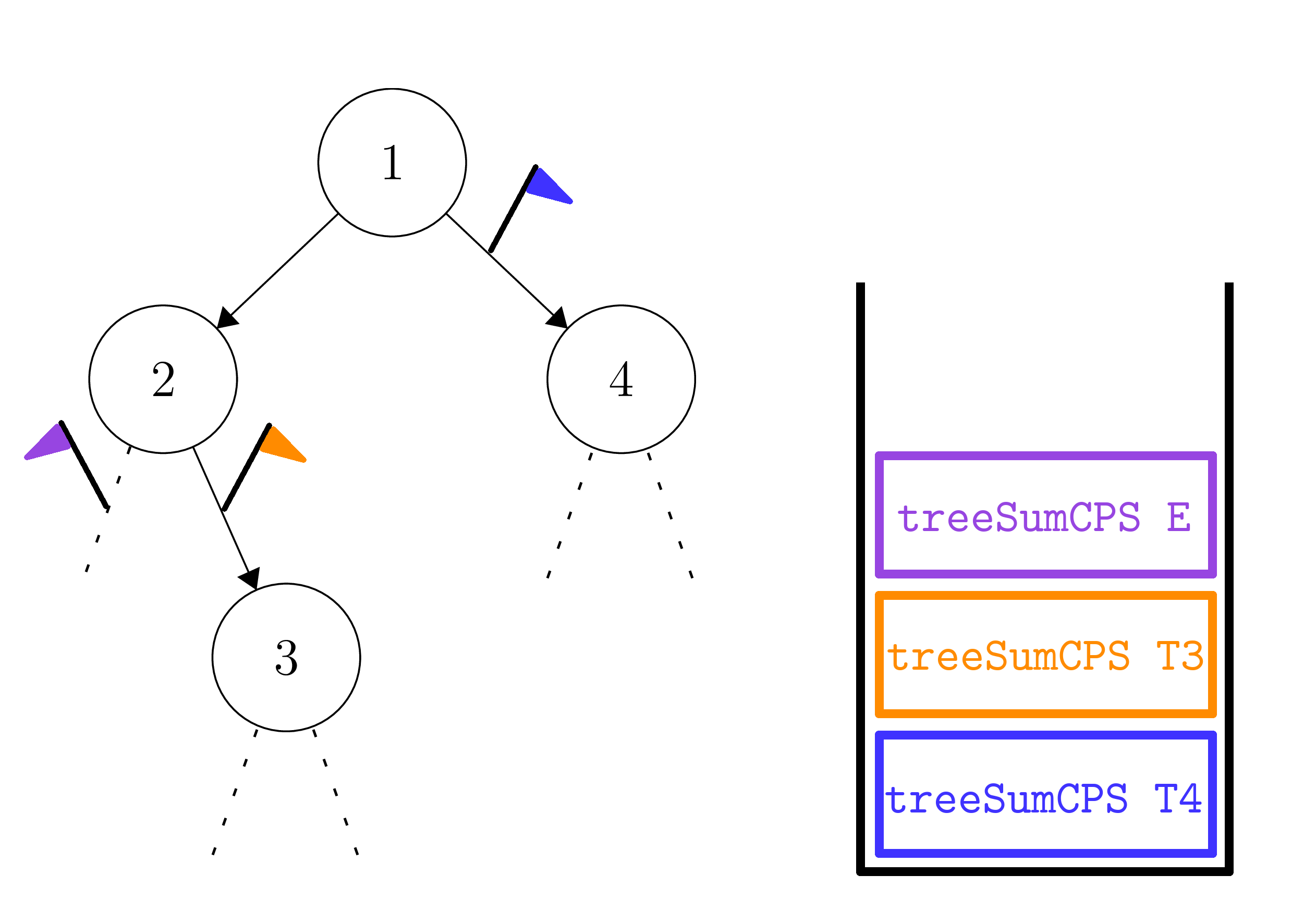
pivot62.com – Continuation-Passing Style (CPS) is a fundamental concept in functional programming that has found applications in various areas of computer science, including compiler design, non-blocking programming, and the transformation of recursive interpreters into abstract machines. This article explores some advanced techniques in CPS, highlighting its versatility and power in handling complex control flow and computational tasks.

Understanding Continuation-Passing Style

CPS is a programming style where control is explicitly passed in the form of a continuation. This means that instead of directly returning a result, a function passes its result to a continuation, which is another function that decides what to do with the result. This style is particularly useful in functional programming languages where it can be used to implement arbitrary control flow constructs and to handle exceptions and other control structures elegantly.

Advanced Techniques in CPS

1. Non-Blocking Programming

One of the practical applications of CPS is in non-blocking programming, where it allows for asynchronous execution of functions. This is particularly useful in JavaScript, where CPS can be used to manage callbacks and avoid the “callback hell” that often plagues asynchronous code.

2. Compiler Optimization

CPS is also used as an intermediate compiler representation, which helps in optimizing the code. By transforming code into CPS, compilers can apply optimizations that are difficult or impossible to apply in direct style. This includes the optimization of recursive functions, which can be transformed into iterative forms using CPS, thus avoiding stack overflows.

3. Defunctionalization and Closure-Passing Style

Defunctionalization is a technique used in CPS where functions are represented as data structures rather than as first-class objects. This can lead to more efficient code, especially in environments where function pointers are expensive. Closure-passing style is a variant of CPS where closures are passed instead of continuations, which can be useful in certain optimization scenarios.

4. Transformation of Recursive Interpreters

CPS and defunctionalization can be used together to transform recursive interpreters into abstract machines. This technique, pioneered by Reynolds, allows for the implementation of interpreters that are more efficient and easier to reason about.

5. Backpropagation with Continuation Callbacks

In the context of machine learning, CPS can be used to implement backpropagation with continuation callbacks. This technique allows for the efficient computation of gradients in neural networks, which is crucial for training deep learning models.

Conclusion

Continuation-Passing Style is a powerful tool in the functional programmer’s toolkit, offering a variety of advanced techniques that can be applied to solve complex problems. From non-blocking programming to compiler optimization, CPS provides a flexible framework that can be adapted to meet the needs of a wide range of applications. As the field of computer science continues to evolve, CPS will likely continue to play a significant role in shaping the future of programming.