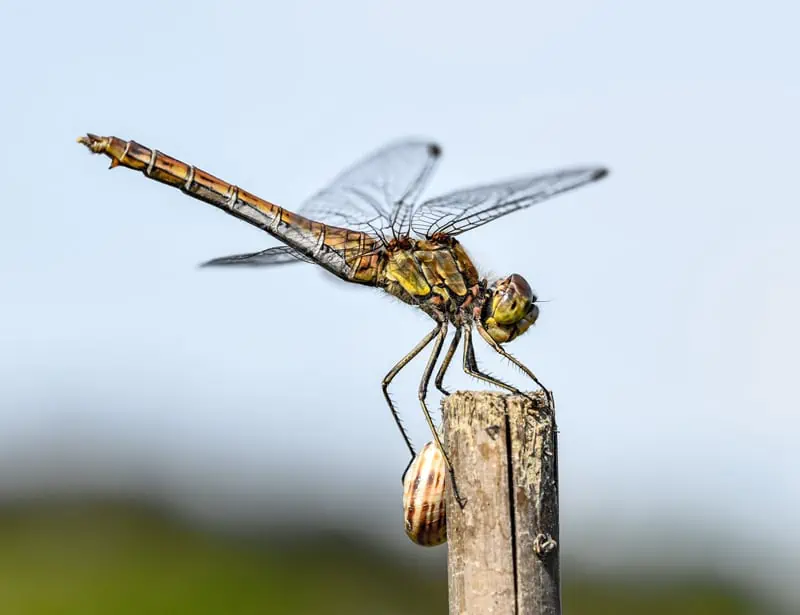
pivot62.com – Dragonflies, with their iridescent wings and agile flight, are among the most captivating insects. Belonging to the order Odonata (meaning “toothed jaws”), they are ancient predators that have existed for over 300 million years. This article explores the fascinating world of dragonflies, from their unique biology and life cycle to their ecological significance and captivating behaviors.
Physical Characteristics: Designed for Predation
Dragonflies possess several key features that make them highly effective predators:
- Large Compound Eyes: Their large compound eyes provide nearly 360-degree vision, allowing them to detect prey and predators from all directions.
- Two Pairs of Strong Wings: Their two pairs of independent wings allow for exceptional maneuverability in flight, including hovering, rapid turns, and high speeds.
- Elongated Body: Their elongated body provides stability during flight.
- Short Antennae: They have short, bristle-like antennae.
- Powerful Jaws (Mandibles): Their strong mandibles are used for capturing and consuming prey.
Life Cycle: Incomplete Metamorphosis with Aquatic Nymphs
Dragonflies undergo incomplete metamorphosis, with three distinct life stages:
- Egg: Dragonfly eggs are laid in or near water, often attached to aquatic plants.
- Nymph (Naiad): The aquatic nymph, also known as a naiad, is a voracious predator, feeding on other aquatic insects, tadpoles, and even small fish. They breathe through gills located in their rectum. They molt several times as they grow.
- Adult: After several molts, the nymph emerges from the water, shedding its exoskeleton and transforming into an adult dragonfly.
Diversity and Classification: Two Suborders
The order Odonata is divided into two suborders:
- Anisoptera (Dragonflies): Characterized by their larger size and wings held horizontally at rest.
- Zygoptera (Damselflies): Characterized by their smaller size and wings held together above their body at rest. Damselflies also have eyes that are widely separated, while dragonflies’ eyes touch or nearly touch.
Habitat and Distribution: Near Freshwater Habitats
Dragonflies are primarily found near freshwater habitats, including:
- Ponds and lakes
- Rivers and streams
- Marshes and wetlands
They are distributed globally, except for Antarctica.
Feeding and Diet: Voracious Predators
Both dragonfly nymphs and adults are predators:
- Nymphs: They feed on a variety of aquatic organisms.
- Adults: They prey on flying insects, including mosquitoes, flies, and other dragonflies.
Flight and Behavior: Masters of Aerial Acrobatics
Dragonflies are renowned for their exceptional flight abilities:
- Agile Flight: They can hover, fly forwards and backwards, and make rapid turns.
- Territoriality: Male dragonflies are often territorial, defending their breeding grounds from other males.
- Mating Behavior: Dragonflies have a unique mating behavior, with the male transferring sperm to the female indirectly.
Ecological Roles: Important Predators in Ecosystems
Dragonflies play crucial roles in ecosystems as top predators:
- Pest Control: They help control populations of mosquitoes and other pest insects.
- Indicator Species: Their presence and abundance can indicate the health of aquatic ecosystems.
- Food Source: Dragonfly nymphs and adults serve as a food source for various animals, including fish, birds, and amphibians.
Dragonflies and Humans: Beneficial Insects and Cultural Significance
Dragonflies have various interactions with humans:
- Beneficial Insects: They are considered beneficial insects due to their role in pest control.
- Cultural Symbolism: Dragonflies have cultural significance in various societies, often symbolizing transformation, strength, and agility.
Threats and Conservation: Habitat Loss and Pollution
Dragonfly populations can be affected by:
- Habitat Loss: The destruction and degradation of freshwater habitats are major threats.
- Pollution: Water pollution can harm dragonfly nymphs.
- Climate Change: Changes in temperature and precipitation patterns can affect dragonfly distributions and life cycles.
Conclusion: Appreciating the Dragonfly’s Mastery
Dragonflies are fascinating and ecologically important insects. Their remarkable flight abilities, predatory lifestyle, and unique life cycle make them a true wonder of the natural world. By understanding their biology, behavior, and the threats they face, we can better appreciate their value and contribute to their conservation. Their presence in our environment is a sign of a healthy ecosystem and a testament to the power of adaptation.