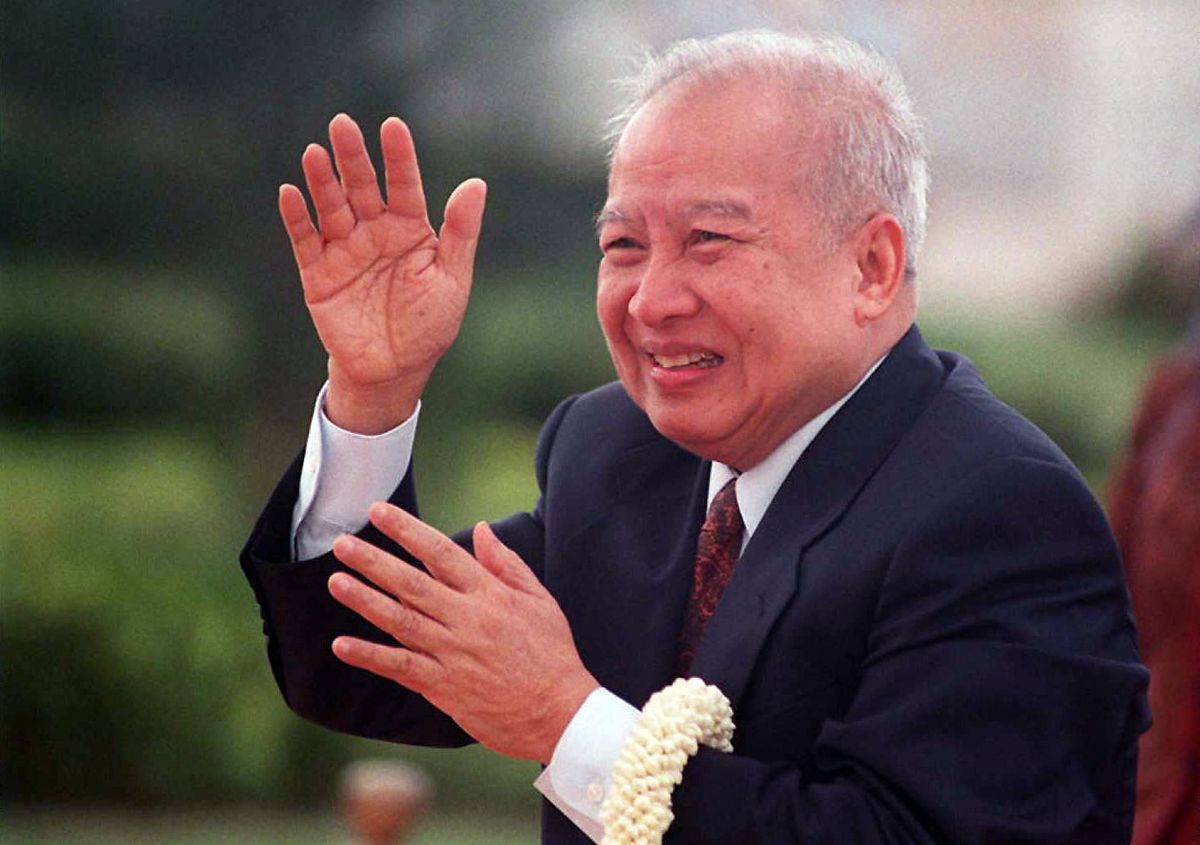
Norodom Sihanouk: A Pivotal Figure in Cambodia’s Modern History

pivot62.com – Prince Norodom Sihanouk, one of Cambodia’s most significant and influential figures, played a central role in shaping the nation’s political and cultural landscape throughout the 20th century. Born in 1922, Sihanouk’s life spanned a turbulent period in Cambodia’s history, during which he navigated colonial rule, independence, war, and the devastating Khmer Rouge regime. His leadership, both as king and as a political figure, helped define Cambodia’s modern identity and played a key part in its complex political developments.

Early Life and Ascension to the Throne:

Norodom Sihanouk was born on October 31, 1922, into the royal family of Cambodia. He was the son of King Norodom Suramarit and Queen Sisowath Kossamak, both of whom were important figures in the Cambodian monarchy. Sihanouk’s early life was shaped by the royal traditions of Cambodia, but his rise to power would be complicated by the colonial presence of France.

In 1941, at the age of 18, Sihanouk ascended to the throne as King Norodom Sihanouk, succeeding his father. His reign began during a period of French colonial control over Cambodia, and he quickly became a symbol of the Cambodian people’s desire for autonomy. While initially seen as a figurehead under French rule, Sihanouk’s charisma, ambition, and political maneuvering soon made him a dominant figure in Cambodian politics.

The Road to Independence:

In the years following his ascension to the throne, Sihanouk became increasingly focused on securing Cambodia’s independence from French colonial rule. His skillful diplomacy and ability to balance various political forces helped lead Cambodia to independence in 1953, a goal that had eluded many Cambodian leaders before him.

Sihanouk’s leadership was instrumental in securing independence for Cambodia, and he was heralded as a national hero. After the country gained independence, Sihanouk continued to push for Cambodia’s sovereignty on the global stage. His role as a political leader, both domestically and internationally, grew as he worked to maintain Cambodia’s independence and neutrality in the midst of Cold War tensions.

Reign as King and Political Leadership:

King Norodom Sihanouk’s reign (1953-1970) saw a period of relative stability and prosperity for Cambodia, which was underpinned by his active leadership. He pursued a policy of neutrality, positioning Cambodia as a neutral state in the conflict between the U.S. and communist forces in Southeast Asia. He attempted to steer Cambodia away from the influence of both the United States and communist Vietnam.

Sihanouk also made significant strides in modernizing Cambodia’s infrastructure, education, and economy. Under his rule, Cambodia saw an increase in foreign investment and a cultural renaissance, which included the promotion of the classical Khmer arts and the preservation of Cambodia’s heritage.

Despite his initial success in diplomacy, Sihanouk’s reign was not without challenges. Domestic politics were fraught with opposition, and the Vietnam War had a destabilizing effect on Cambodia. In 1970, while Sihanouk was in France for medical treatment, a coup led by General Lon Nol ousted him from power. This event would set the stage for one of the most tragic and devastating periods in Cambodian history.

Exile and Return to Power:

After being deposed in 1970, Sihanouk spent years in exile. During this time, he attempted to build alliances with various factions, including the Khmer Rouge, the communist guerrilla group that would ultimately seize power in 1975. Sihanouk initially supported the Khmer Rouge, hoping they would protect Cambodia’s sovereignty from foreign influence. However, the Khmer Rouge’s brutal and genocidal rule soon proved disastrous for the Cambodian people, and Sihanouk became a prisoner of the regime.

From 1975 to 1979, Cambodia suffered under the Khmer Rouge’s radical policies, which resulted in the deaths of an estimated 1.7 million people. Sihanouk’s support for the Khmer Rouge was tragically seen as a miscalculation, and he was left powerless to intervene. After the fall of the Khmer Rouge, Sihanouk was restored to power by the Vietnamese-backed government in 1979, though he no longer held the same influence.

Return to the Throne and Legacy:

Sihanouk’s legacy continued to unfold even after his formal abdication in 2004, when his son, King Norodom Sihamoni, succeeded him. Although his health had declined in his later years, Sihanouk remained a highly respected figure in Cambodian politics and culture, even during his exile in Beijing. He was revered for his role in securing Cambodia’s independence, and his contributions to the nation’s identity were acknowledged by many, despite the challenges he faced.

Prince Norodom Sihanouk’s legacy is one of both triumph and tragedy. He played a crucial role in Cambodia’s independence, modernization, and cultural preservation, yet he also witnessed the horrors of the Khmer Rouge era and the destruction of much of the progress his leadership had achieved. His complex and multifaceted life makes him a towering figure in Cambodia’s history, and his influence remains felt in the nation today.

Conclusion:

Prince Norodom Sihanouk was a towering figure whose life spanned Cambodia’s most turbulent and transformative periods. From his early years as a monarch who led Cambodia to independence, to his later years in exile and eventual return to power, Sihanouk’s impact on the country was immeasurable. His political skill, diplomatic efforts, and dedication to Cambodia’s sovereignty left an indelible mark on the nation’s history.

Though his life was marred by conflict and the devastation of the Khmer Rouge, Prince Sihanouk’s legacy as the father of modern Cambodia remains intact. His contribution to Cambodian independence, cultural identity, and political leadership has made him one of the most important and memorable figures in the history of Southeast Asia.

Resep Burger Ayam Pedas yang Lezat dan Nikmat

Burger ayam pedas adalah pilihan yang sempurna bagi Anda yang menyukai rasa pedas dan gurih. Dengan bumbu yang khas dan ayam yang juicy, burger situs slot bet 200 cocok untuk disantap kapan saja. Berikut adalah resep burger ayam pedas yang lezat dan nikmat untuk memanjakan lidah Anda!

Bahan-Bahan:

Untuk Patty Burger Ayam Pedas:

  • 500 gram daging ayam giling (bagian dada atau paha tanpa kulit)
  • 1 butir telur (untuk mengikat)
  • 2 sendok makan saus sambal (sesuaikan dengan tingkat kepedasan yang diinginkan)
  • 1 sendok teh bubuk cabai (opsional, untuk menambah rasa pedas)
  • 2 sendok makan saus tomat atau saus BBQ (untuk menambah rasa manis dan sedikit smoky)
  • 1 sendok teh garam
  • 1/2 sendok teh lada hitam
  • 1 sendok makan bawang merah cincang halus
  • 1 sendok makan bawang putih cincang halus
  • 1 sendok teh paprika bubuk (untuk aroma smokey)
  • 2 sendok makan roti parut atau oats (untuk memberikan tekstur pada patty)
  • 1 sendok makan minyak zaitun (untuk menggoreng)

Untuk Topping Burger:

  • Selada secukupnya
  • Tomat iris tipis
  • Timun iris tipis
  • Bawang bombay iris tipis (opsional)
  • Keju cheddar (opsional)
  • Mayones pedas atau saus sambal (sesuai selera)
  • Roti burger (roti burger klasik atau roti brioche)

Langkah-Langkah Membuat Burger Ayam Pedas:

1. Membuat Patty Burger Ayam Pedas:

  • Campurkan bahan: Dalam mangkuk besar, campurkan daging ayam giling, telur, saus sambal, saus tomat atau BBQ, garam, lada hitam, bawang merah, bawang putih, paprika bubuk, dan bubuk cabai (jika ingin pedas lebih kuat).
  • Tambahkan roti parut atau oats untuk memberikan tekstur yang lebih baik pada patty.
  • Aduk rata semua bahan hingga tercampur dengan baik.
  • Bentuk adonan menjadi empat patty dengan ukuran sesuai roti burger yang digunakan. Pastikan patty tidak terlalu tebal agar matang merata.

2. Memasak Patty Burger Ayam Pedas:

  • Panaskan minyak zaitun dalam wajan anti lengket dengan api sedang-tinggi.
  • Goreng patty selama sekitar 4-5 menit di setiap sisi hingga berwarna kecoklatan dan matang sempurna. Pastikan bagian dalam ayam matang, tetapi tetap juicy.
  • Jika ingin menambahkan keju cheddar, letakkan selembar keju di atas patty pada menit terakhir pemasakan dan tutup wajan agar keju meleleh dengan baik.

3. Menyiapkan Roti Burger:

  • Sementara itu, potong roti burger menjadi dua bagian.
  • Panggang bagian dalam roti burger di atas wajan atau pemanggang hingga sedikit kecoklatan dan renyah.
  • Oleskan sedikit mayones pedas atau saus sambal di bagian bawah roti untuk memberikan rasa pedas yang lebih kuat.

4. Menyusun Burger Ayam Pedas:

  • Letakkan patty ayam pedas yang sudah matang di atas bagian bawah roti.
  • Tambahkan selada, iris tomat, timun, dan iris bawang bombay di atas patty untuk rasa segar yang kontras dengan pedasnya patty ayam.
  • Jika menggunakan keju, pastikan keju sudah meleleh dengan sempurna di atas patty.
  • Tutup dengan bagian atas roti burger.

5. Penyajian:

  • Sajikan burger ayam pedas dengan kentang goreng, salad, atau acar sebagai pelengkap.
  • Nikmati burger ayam pedas yang gurih dan nikmat ini bersama teman atau keluarga!

Tips Membuat Burger Ayam Pedas yang Lezat:

  1. Sesuaikan tingkat kepedasan: Anda bisa menambah atau mengurangi saus sambal dan bubuk cabai sesuai dengan selera pedas Anda. Gunakan cabai rawit untuk rasa pedas yang lebih kuat.
  2. Agar patty tidak kering: Jangan terlalu lama memasak patty agar ayam tetap juicy. Pastikan api sedang-tinggi agar bagian luar berwarna kecoklatan, tetapi bagian dalam tetap lembut.
  3. Pilih roti yang empuk: Gunakan roti burger yang empuk dan mudah dipanggang, seperti roti brioche atau roti gandum. Roti yang lebih tebal dan empuk dapat menahan semua topping dengan baik.
  4. Tambahkan bahan segar: Selalu tambahkan sayuran segar seperti selada, tomat, dan timun untuk memberikan kontras rasa segar dengan pedasnya ayam.

Variasi Topping Burger Ayam Pedas:

  • Alpukat: Tambahkan irisan alpukat untuk rasa creamy yang melengkapi rasa pedas pada burger.
  • Crispy Onion Rings: Untuk tambahan tekstur renyah dan rasa gurih, Anda bisa menambahkan onion rings di atas patty.
  • Saus BBQ Pedas: Gunakan saus BBQ pedas sebagai alternatif saus sambal untuk rasa yang smoky dan pedas.
  • Bacon Crispy: Untuk rasa gurih tambahan, tambahkan irisan bacon crispy di atas patty ayam.

Kesimpulan

Dengan resep burger ayam pedas ini, Anda dapat menikmati burger yang gurih, pedas, dan segar dalam satu gigitan. Patty ayam yang lembut dan juicy dipadukan dengan topping segar dan saus pedas menciptakan pengalaman makan yang nikmat dan menggugah selera. Jangan ragu untuk bereksperimen dengan tingkat kepedasan sesuai selera Anda!

Sophie, Duchess of Edinburgh: A Royal Life of Dedication & Family

pivot62.com – Sophie, Duchess of Edinburgh, born Sophie Helen Rhys-Jones on January 20, 1965, is the wife of Prince Edward, Duke of Edinburgh, and a member of the British royal family. Throughout her life, Sophie has been recognized for her grace, dedication to charity, and commitment to family. Having seamlessly integrated into royal life, she is known for her advocacy in a wide range of charitable causes, her role as a mother, and her strong partnership with Prince Edward. As the Duchess of Edinburgh, a title she received following the passing of Prince Philip in 2021, Sophie has continued to evolve in her royal duties, balancing them with a fulfilling family life and an increasing presence in the public eye.

Early Life and Career

Sophie was born in Oxford, England, and grew up in the rural village of Brenchley, Kent. Her early years were relatively private, with her family maintaining a low-key existence away from the limelight. Sophie attended West Kent College in Tonbridge, where she studied secretarial skills and business studies. After completing her education, Sophie worked in public relations and event planning, gaining experience at various firms. Her professional background in PR would prove invaluable in her later royal role, where discretion and communication skills are essential.

Before her marriage to Prince Edward, Sophie’s career as a public relations professional was a notable part of her life. She worked for Clinton Cards and later for McKinsey & Company. In 1996, she co-founded Rhubarb, a public relations agency that she ran until she joined the royal family. Sophie’s PR work gave her insight into media management and public appearances, skills that would serve her well as a member of the royal family.

Meeting Prince Edward and Royal Marriage

Sophie met Prince Edward, the youngest son of Queen Elizabeth II and Prince Philip, in 1993 at a charity event. Their relationship quickly developed, and they became one of the most adored couples in the royal family. Sophie and Prince Edward’s relationship was marked by their shared values of service, discretion, and a strong sense of duty.

In 1999, Sophie and Prince Edward were married in a grand ceremony at St. George’s Chapel in Windsor Castle. The wedding was a significant occasion for the royal family, as it marked the first royal wedding of the 21st century. Sophie became the Countess of Wessex upon her marriage, and the couple’s union was seen as an example of a more modern and relatable royal relationship.

Over the years, Sophie and Edward’s relationship has been characterized by mutual support and a strong partnership. Sophie, often described as warm and down-to-earth, has seamlessly adapted to her role as a member of the royal family, and the couple has frequently been seen at royal events and charity functions together.

The Duchess of Edinburgh: A New Role

Following the death of Prince Philip in April 2021, Sophie’s role within the royal family grew in significance. In March 2023, Sophie’s husband, Prince Edward, was granted the title of Duke of Edinburgh, and she became the Duchess of Edinburgh. This title, once held by Prince Philip, was passed to Edward as part of the monarchy’s plan for the next generation of royals. Sophie’s new title has not only marked a significant shift in her royal responsibilities but also reflected her increasing role in supporting Prince Edward as the Duke of Edinburgh.

As the Duchess of Edinburgh, Sophie has taken on an active role in supporting the Duke of Edinburgh’s Award, a youth development program created by Prince Philip in 1956. This program has been a central part of the Duke’s legacy, and Sophie’s involvement has helped to continue its mission of empowering young people and encouraging them to achieve their full potential. Sophie has also been deeply involved in various other charitable causes, demonstrating her commitment to both the royal family’s duties and her personal values.

Charity Work and Advocacy

One of Sophie’s defining characteristics as a royal is her commitment to charitable work. She is involved in numerous organizations and has a special focus on issues related to children, education, and health. Her charitable endeavors have made her one of the most active members of the royal family in terms of public service, and she often uses her position to raise awareness for causes that matter to her.

Sophie is the patron of several organizations, including the Women’s Refugee Commission, Children’s Society, and Royal Academy of Dance. Her charity work often focuses on improving the lives of vulnerable people, particularly children, and her advocacy for women’s rights and education has garnered widespread praise. She also works with the National Society for the Prevention of Cruelty to Children (NSPCC), where she has supported initiatives aimed at protecting young people from abuse and neglect.

In addition to her work with established charities, Sophie is also known for her involvement in the Duchess of Edinburgh’s Award. This initiative, launched in 2008, aims to encourage young women to step out of their comfort zones and develop the skills and confidence to succeed in life. Sophie’s leadership in this program, alongside her support for the Duke of Edinburgh’s Award, highlights her commitment to helping young people build self-esteem, resilience, and a sense of community.

Family Life and Motherhood

Sophie and Prince Edward have two children: Lady Louise Windsor, born in 2003, and James, Viscount Severn, born in 2007. Both children have largely grown up out of the public eye, with Sophie and Edward being fiercely protective of their privacy. Unlike some other royal children, Louise and James have not been thrust into the media spotlight and have been allowed to live relatively normal lives, despite their royal status.

Sophie has often spoken about her role as a mother, describing it as one of the most important parts of her life. She has been seen attending school events and spending quality time with her children, and she has been vocal about the importance of maintaining a balance between her royal duties and family life. Sophie’s commitment to her children’s well-being is evident, and she has managed to raise them in a manner that reflects her values of kindness, humility, and respect for others.

Sophie’s Legacy and Future in the Royal Family

As the Duchess of Edinburgh, Sophie’s legacy continues to unfold. She has firmly established herself as an active, compassionate, and tireless royal, with her charity work and advocacy taking center stage in her royal life. Her marriage to Prince Edward has brought her into the heart of the royal family, and her evolving role as the Duchess of Edinburgh highlights her importance in the next generation of royals.

Sophie’s personal and professional qualities—her grace, dedication to her family, and commitment to service—ensure that she will continue to have a profound impact on the royal family’s charitable work and public image. As she steps further into her role alongside Prince Edward, the Duchess of Edinburgh will undoubtedly remain a key figure in the monarchy, advocating for important causes and supporting her family as they move forward into the future.

Andrew Johnson: The Seventeenth President (1865–1869)

pivot62.com – Andrew Johnson, the 17th President of the United States, assumed office following the assassination of Abraham Lincoln in April 1865. His presidency, which lasted from 1865 to 1869, is often remembered for its tumultuous nature, marked by his lenient approach to Reconstruction, conflicts with Congress, and impeachment. Johnson’s tenure was a critical period in the post-Civil War era, as the nation struggled to rebuild and reintegrate the Southern states after their defeat in the war. Despite his efforts, his presidency is often regarded as a failure, as his policies and actions led to bitter divisions and significant political strife.

Early Life and Political Career

Andrew Johnson was born on December 29, 1808, in Raleigh, North Carolina, into poverty. His father died when he was young, leaving his mother to raise him. Johnson had little formal education but was determined to improve himself. He worked as a tailor and later opened his own shop. His interest in politics led him to run for local office, and by 1829, he was elected to the Tennessee State Legislature. Johnson’s political career was shaped by his support for the common man, and he quickly rose through the ranks of the Democratic Party.

Johnson served in the U.S. House of Representatives from 1843 to 1853 and then as governor of Tennessee from 1853 to 1857. In 1857, he was elected to the U.S. Senate, where he was one of the few Southern politicians to remain loyal to the Union during the Civil War. His firm stance against secession and support for the Union led to his appointment as military governor of Tennessee during the war. In 1864, in a bid to appeal to both Northern and Southern voters, President Abraham Lincoln selected Johnson as his vice-presidential running mate.

Becoming President: Assassination of Lincoln

Johnson became president on April 15, 1865, after the assassination of Abraham Lincoln. His ascension to the presidency came at a time when the country was still deeply divided. The Civil War had just ended, but the Southern states had not yet been fully reintegrated into the Union, and the fate of the newly freed enslaved population was uncertain.

As a former Southern slave owner and staunch Unionist, Johnson was seen as a moderate figure who could appeal to both sides of the conflict. However, his views on Reconstruction, especially his approach toward the Southern states, would soon lead to significant conflict with Congress and his eventual impeachment.

Reconstruction Under Johnson

Johnson’s approach to Reconstruction, the process of reintegrating the Southern states into the Union, was characterized by a quick and lenient approach. He issued a series of proclamations offering amnesty to former Confederates who pledged loyalty to the Union, and he allowed Southern states to form new governments and re-enter the Union with minimal requirements.

Johnson’s policies were based on the idea of restoring the Union as quickly as possible, but they failed to address the needs of formerly enslaved people or to establish lasting protections for their rights. His policies allowed former Confederate leaders to return to power, and many Southern states enacted Black Codes that severely restricted the rights of African Americans.

  • The Black Codes and Civil Rights: The Black Codes were laws passed in Southern states to restrict the freedoms of African Americans. These laws included provisions that limited the ability of Black people to own property, enter into contracts, or testify in court. Johnson’s failure to confront these oppressive laws and his opposition to civil rights legislation alienated many Northern Republicans, who were pushing for stronger protections for African Americans.
  • The Freedmen’s Bureau: Johnson vetoed key legislation such as the Freedmen’s Bureau Bill, which aimed to provide assistance to formerly enslaved people and poor whites in the South. The Freedmen’s Bureau was an agency created by Congress to help African Americans transition from slavery to freedom by providing food, education, and legal assistance. Johnson’s veto of this bill, which was later overridden by Congress, further fueled tensions between him and the Republican-controlled Congress.

Conflict with Congress and Impeachment

As Johnson’s Reconstruction policies clashed with the Radical Republicans in Congress, tensions escalated. Congress, led by figures such as Thaddeus Stevens and Charles Sumner, wanted to implement a more stringent form of Reconstruction that would provide greater protections for African Americans and punish the South for its role in the Civil War. Johnson, however, sought to restore the Southern states to their pre-war status with minimal intervention, and he continued to veto Congress’s legislative efforts.

The conflict reached a boiling point in 1867 when Johnson violated the Tenure of Office Act, a law passed by Congress that restricted the president’s ability to remove certain officeholders without Senate approval. Johnson dismissed Edwin M. Stanton, his Secretary of War, in defiance of the law and replaced him with a more sympathetic figure. This led to his impeachment by the House of Representatives in 1868.

The impeachment was primarily based on the charge that Johnson had violated the Tenure of Office Act and had failed to enforce the law. Johnson was impeached by the House, but the Senate acquitted him by just one vote, allowing him to remain in office. Despite this narrow victory, his political power was severely diminished, and he was unable to effectively lead the nation in the final years of his presidency.

Foreign Policy and Other Issues

While Johnson’s presidency is mostly remembered for domestic strife, he did achieve some successes in foreign policy.

  • Alaska Purchase: One of the most significant achievements of Johnson’s administration was the purchase of Alaska from Russia in 1867 for $7.2 million. The acquisition, known as Seward’s Folly, after Secretary of State William H. Seward, was initially criticized but later proved to be a wise investment due to Alaska’s rich natural resources, including gold, oil, and minerals.
  • Other Foreign Relations: Johnson also dealt with ongoing tensions with European powers, particularly Great Britain, over issues stemming from the Civil War, such as Confederate privateers and claims for damages by the British. However, Johnson’s foreign policy is not often viewed as a major success, as his attention was mostly consumed by domestic issues.

End of Presidency and Legacy

After leaving office in 1869, Johnson returned to Tennessee, where he briefly returned to political life. He was elected to the U.S. Senate in 1875, becoming the only former president to serve in the Senate after his presidency. Johnson died on July 31, 1875, at the age of 66.

Johnson’s legacy is highly contentious. His presidency is often regarded as a failure due to his opposition to Congressional Reconstruction and his inability to address the rights and needs of African Americans in the post-war South. His lenient policies towards the former Confederacy and his opposition to civil rights legislation left a lasting impact on the South, leading to the establishment of discriminatory laws that would persist well into the 20th century.

While he is remembered for his role in the purchase of Alaska, his domestic legacy remains overshadowed by his impeachment and his failure to effectively guide the nation through the complexities of Reconstruction.

Conclusion

Andrew Johnson’s presidency stands as one of the most controversial and divisive in American history. His failure to reconcile his views with those of Congress, coupled with his resistance to the protection of civil rights for African Americans, tarnished his legacy. Though he sought to quickly reunite the nation after the Civil War, his policies ultimately deepened divisions and left the South in turmoil for years to come. While Johnson is sometimes remembered for his foreign policy successes, particularly the purchase of Alaska, his presidency is largely marked by conflict, impeachment, and the unresolved struggles of Reconstruction.

KPK Tetapkan Dua Tersangka dalam Kasus Korupsi Proyek EPC PT Pembangunan Perumahan

pivot62 – Komisi Pemberantasan Korupsi (KPK) telah menetapkan dua orang sebagai tersangka dalam kasus dugaan korupsi di Divisi Engineering, Procurement and Construction (EPC) PT Pembangunan Perumahan (PT PP) untuk tahun anggaran 2022-2023. Pengumuman ini disampaikan oleh Juru Bicara KPK, Tessa Mahardika Sugiarto, di Gedung KPK, Jakarta, pada Jumat (20/12/2024).

Menurut Tessa, penyidikan kasus ini dimulai pada 9 Desember 2024. “Untuk diketahui bahwa per tanggal 9 Desember 2024, KPK telah memulai penyidikan untuk perkara sebagaimana tersebut di atas dan telah menetapkan dua orang sebagai tersangka,” ujar Tessa.

Namun, hingga saat ini, identitas kedua tersangka belum dapat diungkapkan karena proses penyidikan masih berjalan. “Proses penyidikan saat ini masih berjalan, untuk nama dan jabatan tersangka belum dapat disampaikan saat ini,” tambah Tessa.

Selain itu, KPK juga telah melakukan pencegahan bepergian ke luar negeri kepada kedua tersangka selama enam bulan ke depan. Larangan ini dilakukan untuk memastikan keberadaan mereka di wilayah Indonesia selama proses penyidikan berlangsung. “Larangan bepergian ke luar negeri tersebut dilakukan oleh penyidik karena keberadaan yang bersangkutan di wilayah Indonesia dibutuhkan dalam rangka proses penyidikan,” pungkas Tessa sbobet88.

kpk-tetapkan-dua-tersangka-dalam-kasus-korupsi-proyek-epc-pt-pembangunan-perumahan

KPK juga telah mengajukan permohonan pencegahan bepergian ke luar negeri untuk dua orang berinisial DM dan HNN pada 11 Desember 2024. Keputusan ini berlaku selama enam bulan. “Tindakan larangan bepergian ke luar negeri ini dilakukan oleh penyidik. Keberadaan yang bersangkutan di wilayah Indonesia dibutuhkan dalam proses penyidikan dugaan tindak pidana korupsi tersebut,” ucap Tessa.

Dugaan korupsi ini diduga terjadi pada proyek-proyek di Divisi EPC PT PP yang dikerjakan pada tahun 2022-2023. Hasil perhitungan sementara menunjukkan bahwa kerugian negara akibat kasus ini mencapai sekitar Rp80 miliar.

Kasus ini masih dalam tahap penyidikan, dan KPK berkomitmen untuk terus mengusut tuntas dugaan korupsi ini. “Proses penyidikan akan terus berjalan, dan kami akan mengungkapkan identitas tersangka serta konstruksi perkara setelah proses penyidikan rampung,” tutup Tessa.

Scusa se è Poco (1982): Italian Society & Human Nature

pivot62.com “Scusa se è Poco” (translated as “Sorry if It’s Little”) is a 1982 Italian comedy film directed by Nanni Loy, one of Italy’s most prominent filmmakers known for his sharp social commentary and witty storytelling. The film stars Giancarlo Giannini, Ornella Muti, and Enrico Montesano, and offers a hilarious yet insightful exploration of Italian society, particularly focusing on themes such as class, ambition, and the human desire for more. A satire of materialism and the absurdity of social norms, “Scusa se è Poco” brings humor to the flaws of human nature while offering a critique of a society obsessed with status and wealth.

Plot Overview

Set in Rome, “Scusa se è Poco” centers around Peppino (played by Giancarlo Giannini), an ordinary working-class man living in a modest apartment with his wife, Assunta (played by Ornella Muti), and their two children. The film begins with Peppino, a factory worker, trying to balance the struggles of everyday life with his desire for a better future. His dreams of climbing the social ladder seem to always be just out of reach, no matter how hard he works or how many schemes he comes up with.

In an attempt to improve his family’s situation, Peppino becomes entangled in a series of increasingly absurd and comical events. His ambitious nature leads him to dabble in various ventures, from trying to start his own small business to attempting to impress the upper echelons of society. Along the way, he finds himself caught up in a web of social pretensions, misunderstandings, and ultimately, failure.

The film takes a satirical approach to Italian society’s obsession with status and wealth, using Peppino’s journey as a lens through which the audience can reflect on the shallowness and absurdity of such aspirations. While Peppino’s pursuit of a better life is relatable, the situations he finds himself in become increasingly ridiculous, turning the film into a sharp comedy that mocks both the working class’s pursuit of upward mobility and the wealthy’s obsession with appearances.

Themes: Class Struggles, Materialism, and Social Satire

At its core, “Scusa se è Poco” is a social satire that tackles issues of class and the pursuit of wealth in Italy during the early 1980s. The film critiques the absurd lengths to which people will go in order to achieve a higher social standing, and the lengths to which they will deceive themselves and others to maintain their sense of success. Through Peppino’s attempts to break free from his humble beginnings, the film reflects the societal pressure placed on individuals to conform to a certain standard of living.

The theme of materialism runs deep throughout the film, as the characters constantly measure their worth by the things they own and the status they hold. Peppino’s obsession with wealth and social recognition is mirrored by the increasingly ridiculous ways in which he tries to improve his circumstances. Whether it’s trying to buy into the lifestyle of the rich or attempting to appear successful in front of his peers, Peppino’s actions reflect the obsession with material success that pervades Italian society during the period.

However, the film does not only criticize the upper classes but also the working class‘s misguided belief that wealth and status are the ultimate goals. Peppino’s efforts to break free from his working-class roots lead him into humorous and often absurd situations. His failure to achieve what he desires is a reflection of the larger societal flaw: the belief that wealth and status are the key to happiness, and that climbing the social ladder is the only route to success.

The film’s satire also extends to the way in which people attempt to manipulate appearances to fit into societal norms. Peppino’s interactions with the upper class and his obsession with outward success reveal the pretensions and insecurities that are often hidden beneath the surface. Loy uses humor to expose the contradictions and absurdities of both the working class’s yearning for wealth and the rich’s preoccupation with maintaining their status.

Performances: Giancarlo Giannini, Ornella Muti, and Enrico Montesano

The performances in “Scusa se è Poco” are integral to the film’s comedic tone and its success as a social satire. Giancarlo Giannini delivers an outstanding performance as Peppino, the well-meaning but hapless man whose ambitions lead him into a series of comical misadventures. Giannini expertly balances the character’s frustration, optimism, and eventual disillusionment, making Peppino a sympathetic and relatable figure. His comic timing is perfect, and he masterfully brings out the humor in Peppino’s ill-fated attempts to better his situation.

Ornella Muti, playing Peppino’s wife, Assunta, provides a grounding force for the film. Her character’s practicality and sense of reality serve as a contrast to Peppino’s idealism and desire for social success. While Assunta loves her husband, she is often exasperated by his antics and his obsession with social mobility. Muti’s performance adds depth to the film, as she portrays a woman caught between supporting her husband’s dreams and facing the reality of their situation.

Enrico Montesano plays Luigi, a friend of Peppino’s, and adds to the humor and absurdity of the story with his comic antics and over-the-top personality. Montesano’s portrayal of Luigi brings an extra layer of charm and wit to the film, as his character becomes involved in the increasingly convoluted and humorous situations surrounding Peppino’s attempts to climb the social ladder.

The chemistry between the actors is palpable, with each one playing off the others in a way that enhances the comedic aspects of the film. The dynamic between Giannini’s Peppino, Muti’s Assunta, and Montesano’s Luigi creates a natural flow of humor, and their performances keep the audience engaged throughout the film.

Direction and Cinematic Style

Nanni Loy brings his characteristic sharpness and humor to “Scusa se è Poco”, using his direction to critique Italian society with both subtlety and wit. The film’s pacing is fast and energetic, keeping the audience engaged in Peppino’s increasingly ridiculous attempts to improve his life. Loy uses the film’s comedic tone to expose the contradictions and flaws of his characters and the society they inhabit, all while keeping the audience entertained with clever dialogue and amusing situations.

The cinematography, by Giuseppe Ruzzolini, complements the film’s lighthearted tone. The camera captures the contrast between the simplicity of Peppino’s working-class life and the opulence of the wealthy circles he aspires to join. The use of tight shots and close-ups emphasizes the personal nature of the characters’ struggles, while the wider shots help to establish the social dynamics and the comedic situations in which they find themselves.

The score, composed by Francesco De Masi, is lively and complements the film’s energetic pace. The music adds to the film’s comic atmosphere, enhancing the absurdity of the situations that unfold while maintaining a sense of lighthearted fun.

Reception and Legacy

Upon its release, “Scusa se è Poco” was met with positive reviews, particularly for its sharp humor and the performances of the cast. The film’s critique of materialism and class struggles resonated with audiences, particularly in Italy, where the social and economic dynamics of the time were reflected in the film’s narrative. The film’s comedic approach to these serious themes allowed it to engage viewers while also providing food for thought about the nature of ambition, wealth, and social status.

In the years since its release, “Scusa se è Poco” has become a beloved comedy classic in Italian cinema. It remains a testament to Nanni Loy‘s ability to mix social commentary with humor and satire, and its exploration of class and materialism continues to feel relevant. The film is also remembered for its strong performances, particularly Giancarlo Giannini‘s portrayal of the well-meaning but misguided Peppino.

Conclusion

“Scusa se è Poco” (1982) is a sharp, witty satire that critiques the obsession with material success and the class struggles inherent in Italian society. Through its comedic narrative and memorable performances by Giancarlo Giannini, Ornella Muti, and Enrico Montesano, the film highlights the absurdity of social mobility and the lengths to which people will go to improve their lives. With Nanni Loy at the helm, the film manages to entertain while also offering insightful commentary on the flaws of human nature and societal expectations. It remains a significant work in the Italian cinematic landscape, celebrated for its humor and relevance.

King Hamad bin Isa Al Khalifa (1999–Present)

pivot62.com – King Hamad bin Isa Al Khalifa ascended to the throne in 1999, following the death of his father, King Isa bin Salman Al Khalifa. His reign has been marked by significant political, economic, and social reforms that have modernized Bahrain, while also preserving its traditions and stability. King Hamad is best known for initiating constitutional reforms that restored parliamentary elections, establishing Bahrain as a constitutional monarchy, and promoting policies that have enhanced the country’s economic growth and international standing. Under his leadership, Bahrain has balanced modernization with a commitment to maintaining its heritage, navigating regional challenges while fostering development.

Early Life and Education

Born on January 28, 1950, in Riffa, Bahrain, Hamad bin Isa Al Khalifa is the eldest son of King Isa bin Salman. From a young age, Hamad was groomed for leadership, receiving both a traditional education in Bahrain and extensive formal education abroad. He attended The Leys School in Cambridge, UK, and later went on to the prestigious Sandhurst Royal Military Academy, graduating in 1968. His military training continued with advanced courses in the United States, further preparing him for future leadership.

In 1971, upon Bahrain’s independence, Hamad was appointed as the country’s Crown Prince and later served as the Commander-in-Chief of the Bahrain Defence Force. These roles gave him valuable experience in governance and military affairs, contributing to his comprehensive understanding of national and international security issues.

Ascension to the Throne

King Hamad bin Isa Al Khalifa became the ruler of Bahrain on March 6, 1999, following the death of his father, King Isa. His ascension came at a pivotal moment in Bahrain’s history, as the country faced calls for political reform and economic diversification. King Hamad’s early years on the throne were characterized by a commitment to addressing these challenges and responding to the needs and aspirations of the Bahraini people.

Political Reforms and the National Action Charter

One of King Hamad’s most significant achievements has been the introduction of political reforms aimed at transforming Bahrain into a constitutional monarchy. Shortly after becoming king, he initiated the National Action Charter, a blueprint for political and social reform that was overwhelmingly approved by a national referendum in 2001. The charter called for the re-establishment of the parliamentary system, which had been suspended in 1975, and outlined the principles of democracy, separation of powers, and human rights.

In 2002, King Hamad declared Bahrain a constitutional monarchy and promulgated a new constitution, which reinstated the National Assembly with two chambers: an elected Council of Representatives and an appointed Shura Council. This move was seen as a major step toward democratization and greater political participation. Parliamentary elections were held later that year, marking the return of a more inclusive political system after nearly three decades of limited political expression.

While the political reforms were generally well-received, they have also faced criticism from opposition groups who argue that the appointed Shura Council retains significant power, limiting the influence of the elected representatives. Nevertheless, King Hamad’s reforms laid the foundation for political dialogue and have allowed for greater engagement from various segments of Bahraini society.

Economic Modernization and Diversification

Under King Hamad’s leadership, Bahrain has continued its efforts to diversify its economy, moving beyond its traditional reliance on oil. Recognizing that Bahrain’s oil reserves are limited compared to its Gulf neighbors, King Hamad has prioritized the development of other sectors, including banking, tourism, real estate, and services.

Bahrain’s financial sector, in particular, has flourished under King Hamad’s rule. The country has positioned itself as a regional hub for Islamic finance and banking, attracting international investment and enhancing its global reputation as a business-friendly environment. The government has also implemented reforms to improve the regulatory framework and ease of doing business in Bahrain, further strengthening the country’s economic standing.

Infrastructure development has been another key focus of King Hamad’s reign. Major projects, such as the Bahrain International Airport expansion and the construction of new housing, healthcare, and educational facilities, have contributed to the modernization of Bahrain’s infrastructure. The King Hamad University Hospital and the Bahrain International Circuit, home to the annual Formula 1 Bahrain Grand Prix, are examples of flagship projects that have elevated Bahrain’s profile both regionally and globally.

Social Reforms and Human Development

King Hamad has been a proponent of social reforms aimed at improving the quality of life for Bahraini citizens. His government has invested heavily in education, healthcare, and housing, with a particular focus on promoting equality and social inclusion.

In 2005, Bahrain became the first country in the Arab world to introduce unemployment insurance, providing a safety net for its citizens. King Hamad has also supported efforts to empower women and promote gender equality. Women in Bahrain have made significant strides in areas such as education, business, and politics, with several women appointed to high-level government positions, including ambassadors, ministers, and judges.

Under King Hamad’s leadership, Bahrain has also made efforts to enhance human rights, although this remains a contentious issue. While the government has implemented reforms to improve conditions for workers and protect civil liberties, human rights organizations have raised concerns about restrictions on freedom of expression, political opposition, and the treatment of protesters, particularly in the wake of the 2011 Arab Spring protests.

The Arab Spring and National Dialogue

In 2011, Bahrain was swept by the wave of protests and political unrest that spread across much of the Arab world. The protests, led by opposition groups seeking political reforms and greater representation, were met with a government crackdown, which drew international attention and criticism.

In response to the unrest, King Hamad initiated a National Dialogue process, aimed at addressing the grievances of opposition groups and fostering political reconciliation. The government also established the Bahrain Independent Commission of Inquiry (BICI), led by international experts, to investigate the events of 2011 and recommend reforms. The BICI report, published later that year, acknowledged human rights violations and called for accountability and institutional reforms.

Since then, King Hamad has overseen the implementation of several reforms aimed at improving governance and protecting human rights, although political tensions remain. The government’s efforts to balance security concerns with the need for political dialogue continue to shape the country’s domestic landscape.

Foreign Policy and Regional Diplomacy

King Hamad has played an active role in shaping Bahrain’s foreign policy, particularly within the context of the Gulf Cooperation Council (GCC). Bahrain’s foreign policy under his leadership has been characterized by close alliances with its Gulf neighbors, particularly Saudi Arabia, as well as strong ties with Western powers, including the United States and the United Kingdom.

Bahrain hosts the U.S. Navy’s Fifth Fleet, making it a key strategic ally of the United States in the region. The country’s close relationship with the U.S. has been central to its security strategy, particularly in light of regional tensions, including the ongoing rivalry between Iran and Saudi Arabia. King Hamad’s foreign policy has focused on maintaining Bahrain’s security and stability, while also positioning the country as a regional player in diplomatic and economic affairs.

Legacy and Ongoing Challenges

As of 2024, King Hamad bin Isa Al Khalifa’s reign has spanned over two decades, during which time Bahrain has undergone significant political, economic, and social changes. His legacy is closely tied to the reforms introduced through the National Action Charter and the modernization of Bahrain’s economy and infrastructure.

However, challenges remain. Political tensions, particularly between the government and opposition groups, continue to be a source of unrest, and the government faces ongoing criticism from human rights organizations regarding its treatment of dissent. Economic diversification efforts, while successful in many respects, also face hurdles due to regional competition and fluctuating global markets.

Conclusion

King Hamad bin Isa Al Khalifa’s leadership since 1999 has been instrumental in shaping the trajectory of modern Bahrain. His vision for political reform, economic diversification, and social development has transformed Bahrain into a more open and progressive society while maintaining its stability in a region often marked by turbulence. Despite challenges, King Hamad’s commitment to modernization, dialogue, and diplomacy continues to influence the country’s path forward, positioning Bahrain as a dynamic player on both the regional and global stage.

The Diet of the Olive Ridley Sea Turtle: A Versatile Feeder

pivot62.com – The Olive Ridley sea turtle (Lepidochelys olivacea) is one of the most widespread and abundant sea turtles in the world, known for its mass nesting events called arribadas. These turtles are primarily found in tropical and subtropical oceans, where they play an essential role in marine ecosystems. Olive Ridley turtles are known for their highly adaptable and opportunistic feeding behavior, consuming a wide variety of food sources. In this article, we will explore the dietary habits of the Olive Ridley sea turtle, their feeding strategies, and their role in the marine food web.

A Varied and Omnivorous Diet

Olive Ridley sea turtles are omnivores, meaning they consume both plant and animal matter. This flexibility in their diet allows them to thrive in a variety of marine habitats and adapt to changing food availability. Unlike some other sea turtles that specialize in specific prey, Olive Ridleys have a more diverse diet, feeding on whatever is readily available.

1. Crustaceans and Mollusks

  • Crustaceans, such as crabs, shrimp, and lobsters, make up a significant portion of the Olive Ridley’s diet. These turtles use their strong jaws to crush the hard shells of their prey, making crustaceans an easily accessible and nutritious food source.
  • Mollusks, including clams, mussels, and snails, are another common prey item. Olive Ridleys are adept at prying open shells to access the soft tissue inside, which provides them with essential nutrients like protein and fats.

2. Jellyfish and Other Soft-Bodied Prey

  • Olive Ridleys, like other sea turtles, are known to consume jellyfish. Despite the stinging tentacles of jellyfish, these turtles can safely consume them thanks to their thick skin and specialized feeding techniques.
  • In addition to jellyfish, Olive Ridleys will eat other soft-bodied invertebrates such as sea anemones and tunicates, which are commonly found in coastal and open-ocean environments.

3. Algae and Seagrass

  • While primarily carnivorous, Olive Ridley turtles also consume algae and seagrass when other food sources are scarce or unavailable. These plant materials provide important vitamins and fiber that help maintain the turtles’ digestive health.
  • This plant-based diet is more common in juvenile turtles, which may feed in coastal areas where algae and seagrass beds are abundant, offering easy access to these plant resources.

4. Fish and Fish Eggs

  • Olive Ridley turtles will also feed on small fish and fish eggs, especially when foraging in coastal or reef areas. These protein-rich foods are often consumed opportunistically and can be found in the diets of turtles in both pelagic (open ocean) and coastal habitats.

Feeding Behavior and Habitat

Olive Ridley sea turtles are primarily found in tropical and subtropical waters, where they inhabit coastal regions, estuaries, and open ocean environments. Their feeding behavior is highly adaptable, allowing them to forage in a range of habitats depending on their life stage and the availability of food.

1. Pelagic Foraging

  • Adult Olive Ridleys are often found in the open ocean, where they feed on pelagic (open water) prey such as jellyfish, floating crustaceans, and fish. Their ability to dive to significant depths (up to 150 meters or 490 feet) enables them to access prey in deeper waters.
  • While in the pelagic zone, Olive Ridleys also feed on planktonic organisms and debris, making them important contributors to nutrient cycling in the ocean.

2. Coastal Feeding

  • Olive Ridleys will also forage in coastal waters, particularly during their nesting seasons when they come closer to shore. In these areas, they feed on benthic (bottom-dwelling) organisms such as crabs, mollusks, and sea cucumbers.
  • Coastal areas also provide access to seagrass beds, which are particularly important for juvenile Olive Ridleys. These younger turtles may rely more on plant material as they transition to a fully carnivorous diet.

3. Opportunistic Feeding

  • Olive Ridleys are opportunistic feeders, meaning they take advantage of whatever food sources are readily available. This ability to adapt to different environments and food supplies allows them to survive in a variety of habitats and contributes to their widespread distribution.

Ecological Role of Olive Ridley Turtles

Olive Ridley sea turtles play an important role in maintaining the balance of marine ecosystems. Their feeding habits help regulate prey populations and contribute to the health of marine habitats.

1. Controlling Jellyfish Populations

  • By consuming large quantities of jellyfish, Olive Ridley turtles help regulate jellyfish populations. Without natural predators like sea turtles, jellyfish blooms can occur, which can have negative impacts on fish populations and marine ecosystems.

2. Nutrient Cycling in Marine Ecosystems

  • Olive Ridleys contribute to nutrient cycling by consuming a variety of prey and excreting waste that provides nutrients to marine environments. This helps support the growth of seagrass and algae, which in turn supports other marine species.

3. Prey for Predators

  • Despite being skilled predators themselves, Olive Ridley turtles are preyed upon by large sharks, orcas, and saltwater crocodiles. Their eggs and hatchlings are also vulnerable to a variety of predators, including birds, crabs, and mammals.

Threats to Olive Ridley Feeding Habits

Although Olive Ridley sea turtles are considered the most abundant sea turtle species, they still face numerous threats that impact their feeding behavior and habitats.

1. Overfishing and Bycatch

  • Olive Ridley turtles are often caught as bycatch in fishing nets, particularly in trawl, gillnet, and longline fisheries. Accidental capture in fishing gear can result in injury or death, reducing turtle populations and affecting their ability to feed and reproduce.

2. Marine Pollution

  • Marine pollution, particularly plastic debris, poses a significant threat to Olive Ridley turtles. Turtles may mistake plastic bags and other debris for jellyfish or other prey, leading to ingestion that can cause blockages in their digestive system or other health issues.

3. Coastal Development and Habitat Loss

  • Coastal development and habitat destruction can reduce the availability of seagrass beds and benthic prey, especially for juveniles. Loss of feeding grounds may force Olive Ridleys to travel longer distances in search of food, increasing their risk of predation and human-related threats.

Conservation Efforts for Olive Ridley Sea Turtles

Efforts to protect Olive Ridley sea turtles focus on reducing bycatch, protecting nesting sites, and addressing marine pollution.

1. Bycatch Reduction Technologies

  • The use of turtle excluder devices (TEDs) in fishing nets has proven to be an effective measure in reducing bycatch and helping to protect Olive Ridleys from accidental capture.

2. Marine Protected Areas

  • Establishing marine protected areas (MPAs) in regions where Olive Ridleys forage and nest can help safeguard important habitats and ensure the availability of food resources.

3. Pollution Control and Cleanup Efforts

  • Reducing marine pollution, particularly plastic waste, through cleanup efforts, public awareness campaigns, and better waste management practices is essential for protecting Olive Ridleys and other marine species from the dangers of ingesting debris.

Conclusion

The Olive Ridley sea turtle is a versatile and opportunistic feeder, capable of consuming a wide variety of marine organisms, including crustaceans, mollusks, jellyfish, and algae. This adaptability has contributed to the species’ widespread distribution and ability to thrive in both coastal and pelagic environments. However, human activities such as overfishing, pollution, and habitat destruction pose significant threats to the feeding habits and survival of these turtles. Conservation efforts are essential to ensure that Olive Ridley turtles continue to play their vital role in marine ecosystems for generations to come.

Marmot Food: The Diet of These Ground-Dwelling Herbivores

pivot62.com – Marmots are large, ground-dwelling rodents found in mountainous regions and meadows across the Northern Hemisphere. Known for their hibernation habits and social nature, marmots are herbivores that rely on a plant-based diet for survival. Their eating habits are influenced by seasonal changes, as they must consume enough food to store fat reserves for their long hibernation period. This article explores the diet of marmots, the types of food they prefer, and how their feeding behavior adapts to their environment.

1. Marmot Diet Overview: Primarily Herbivorous

Marmots are strictly herbivorous, meaning their diet consists almost entirely of plant matter. They feed on grasses, flowers, and other vegetation that grows in their alpine or meadow habitats. Marmots are grazers and spend a significant portion of their active months consuming food to prepare for hibernation.

Key Components of a Marmot’s Diet:

  • Grasses and herbs: The bulk of their diet.
  • Flowers: Consumed for added nutrients and variety.
  • Vegetables: Leaves, stems, and roots of various plants.
  • Fruits and berries: Seasonal foods that provide additional nutrients.

Their diet is entirely plant-based, and marmots graze throughout the day to meet their nutritional needs.

2. Grasses and Herbs: The Staple of a Marmot’s Diet

Grasses and herbs make up the majority of a marmot’s diet. These foods provide the essential carbohydrates, fiber, and nutrients marmots need for energy and overall health. Marmots graze on a variety of grasses found in their habitats.

Common Grasses and Herbs Eaten by Marmots:

  • Timothy grass: A favorite food source in alpine meadows.
  • Fescue grass: Frequently found in marmot habitats.
  • Clover: A highly nutritious herb that marmots enjoy.
  • Dandelions: Both the leaves and flowers are eaten by marmots.

These plants are abundant in the mountainous regions where marmots live, making them an essential part of their daily diet.

3. Flowers: Nutrient-Rich Seasonal Treats

During the warmer months, marmots also consume flowers, which provide additional nutrients like vitamins and minerals. Flowers are especially important during the summer when they are plentiful in alpine meadows.

Common Flowers Eaten by Marmots:

  • Buttercups: A colorful addition to a marmot’s diet.
  • Asters: Marmots enjoy grazing on these wildflowers.
  • Daisies: Found in meadows, daisies are eaten by marmots for variety.
  • Alpine wildflowers: Marmots feed on a range of wildflowers that grow in high-altitude environments.

Flowers add diversity to the marmot’s diet, giving them access to a wider range of nutrients.

4. Vegetables and Plant Matter: An Important Food Source

Marmots also eat other parts of plants, including leaves, stems, and roots. These foods help marmots meet their nutritional needs, particularly when grasses are less abundant.

Common Plant Matter Eaten by Marmots:

  • Plant stems: Marmots will eat the stems of various meadow plants.
  • Leaves: Tender leaves from a variety of plants are a key part of their diet.
  • Roots: Marmots sometimes dig up and eat the roots of certain plants, particularly when other food is scarce.

These plant materials provide fiber and additional nutrients that help marmots maintain their health throughout the year.

5. Fruits and Berries: Occasional Delicacies

Although not a major part of their diet, marmots do eat fruits and berries when they are available. These foods are more common in late summer and early fall and provide important sugars and vitamins.

Common Fruits and Berries Eaten by Marmots:

  • Wild berries: Marmots consume berries such as blackberries or raspberries.
  • Alpine fruits: In some regions, marmots may eat fruits like wild apples or small alpine fruits.

These foods are typically consumed when they are abundant, offering marmots a sweet, energy-rich snack before hibernation.

6. Feeding Behavior: Preparing for Hibernation

Marmots are known for their preparation for hibernation, which typically lasts from late fall until early spring. During their active months, marmots consume large amounts of food to build up fat reserves. They can spend up to 60% of their waking hours foraging for food in the summer.

Hibernation and Fat Storage:

  • Weight gain: Marmots need to double or triple their body weight in fat to survive the winter months.
  • Foraging intensity: As winter approaches, marmots increase the amount of time they spend eating.

This feeding behavior is crucial to their survival, as marmots rely entirely on their fat stores to last through the long hibernation period.

7. Seasonal Changes in Diet

The availability of food changes with the seasons, which directly impacts what marmots eat. In the spring and early summer, marmots focus on eating fresh grasses and herbs. As the season progresses, they turn to flowers, fruits, and other plants that become available. By late summer and early fall, marmots are in a feeding frenzy, consuming as much food as possible to prepare for hibernation.

Seasonal Foods:

  • Spring: Fresh grasses and herbs.
  • Summer: Grasses, flowers, and some fruits.
  • Fall: Late-season berries, plants, and root vegetables.

Marmots must take advantage of each season’s offerings to ensure they have enough food to store fat for the winter.

8. Feeding Marmots in Captivity

If you are caring for a marmot in captivity, it’s important to provide a diet that closely resembles their natural food sources. Fresh grasses, leafy greens, and vegetables should make up the bulk of their diet, with occasional treats of fruits and flowers.

Ideal Foods for Captive Marmots:

  • Fresh grass: Provide a variety of grasses similar to what they would eat in the wild.
  • Leafy greens: Dandelion greens, clover, and timothy hay are good options.
  • Vegetables: Offer carrots, sweet potatoes, and other root vegetables.
  • Fruits: Small amounts of apples or berries as occasional treats.

Always ensure they have access to fresh water and avoid feeding them processed or sugary foods.

9. Conclusion

Marmots are herbivores with a plant-based diet that includes grasses, flowers, fruits, and vegetables. Their feeding behavior is closely linked to the seasons, with their diet shifting to match the availability of different plants throughout the year. As they prepare for hibernation, marmots consume large quantities of food to build up the fat reserves they need to survive the long winter. Whether in the wild or captivity, marmots require a varied and nutritious diet to thrive. Understanding their dietary needs helps support their health and well-being throughout the year.

The Mountain Zebra: A Striped Survivor – A Distinct Species

pivot62.com – The mountain zebra, a lesser-known relative of the plains zebra, is a stunning creature with a unique appearance and habitat. These equines are characterized by their distinctive stripe pattern, which differs significantly from that of their plains counterparts. The stripes on a mountain zebra are narrower and more numerous, extending all the way down to their hooves.   

Two Subspecies

There are two recognized subspecies of mountain zebra:

  1. Cape Mountain Zebra: This subspecies is endemic to South Africa and is known for its striking black and white stripes. It inhabits the rugged mountain ranges of the Eastern Cape province.   
  2. Hartmann’s Mountain Zebra: This subspecies is found in the arid regions of Namibia and Angola. It is distinguished by its wider, less defined stripes and a distinctive “gridiron” pattern on its rump.   

A Resilient Survivor

Despite facing numerous threats, including habitat loss, poaching, and disease, mountain zebras have shown remarkable resilience. Their ability to adapt to harsh environments and their social behavior have contributed to their survival. Mountain zebras live in small herds, typically consisting of a dominant stallion, a few mares, and their offspring. These herds maintain strong social bonds and work together to protect their territory and young.   

Conservation Efforts

Recognizing the importance of conserving these unique animals, various conservation organizations and governments have implemented measures to protect mountain zebras. These efforts include habitat protection, anti-poaching patrols, and captive breeding programs. The Mountain Zebra National Park in South Africa, for example, is a dedicated conservation area that plays a crucial role in safeguarding the Cape mountain zebra.   

A Symbol of Hope

The mountain zebra serves as a symbol of hope for wildlife conservation. By understanding the challenges faced by these animals and supporting conservation initiatives, we can help ensure their survival for future generations. The unique and captivating appearance of the mountain zebra, combined with its resilience, makes it a beloved and inspiring creature.